With Ohio State’s first 15 practices of the year in the books, we now have a better idea of who’s on the rise and where things stand for the Buckeyes at every position group entering the 2026 season.
New Buckeyes were on the field at every position this spring as 51 new Ohio State players were part of the team that went through the Buckeyes’ March and April practices. There were plenty of newcomers and returning Buckeyes alike who stood out on each side of the ball as players competed for position on the depth chart and looked to prove they can make an impact for OSU this season.
With the Buckeyes currently in a break from on-field activity before summer workouts ramp up in a few weeks, we’re taking a position-by-position look at who stood out this spring, what questions still linger after spring, how the depth chart currently stacks up and the overall outlook for each position going into the summer.
Spring Recaps
The fifth installment of our Spring Recap series looks at a position that generated more intrigue than any other this spring: Wide receiver, where true freshmen and new transfer additions alike made an immediate impression as new Ohio State receivers coach Cortez Hankton rebuilds his unit around superstar wideout Jeremiah Smith.
Spring Standouts
Chris Henry Jr.
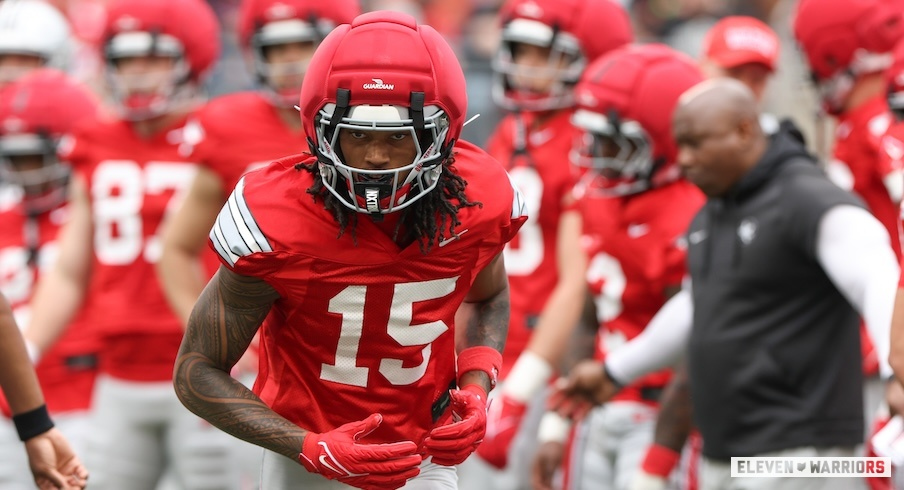
No member of Ohio State’s freshman class entered spring with more hype than Henry, and the five-star wide receiver lived up to expectations.
While he was overshadowed early on by fellow freshman Brock Boyd – more to come on him in just a moment – he had a spectacular finish to the spring, catching four passes for 96 yards and a touchdown in the spring game.
TSC to CHJ for six
— Ohio State Football (@OhioStateFB) April 18, 2026
Big Ten Network pic.twitter.com/OPow9dkZta
One of only two freshmen to have their black stripes removed this spring, Henry exhibited all the traits to be a future star for Ohio State in his first 15 practices as a Buckeye, and Ryan Day’s already made it clear on multiple occasions – including an interview with ESPN last week – that he expects Henry to make an immediate impact in year one.
“I'd be surprised if he's not definitely making an impact in the fall for us,” Day told ESPN’s Heather Dinich. “The question is how fast? He's definitely going to play. How much and how quickly he plays is going to be up to him in terms of the type of summer he has, and then obviously preseason.”
Brock Boyd
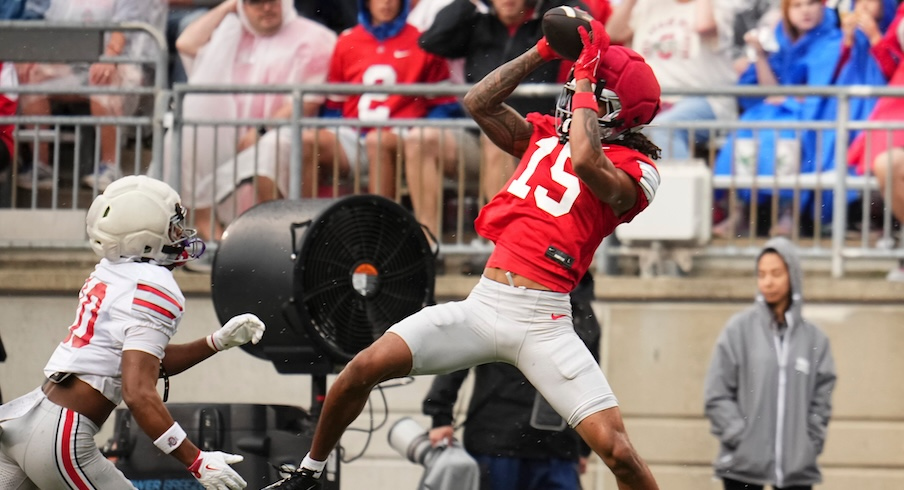
Boyd arrived at Ohio State with none of the hype that Henry had, but the three-star recruit rapidly made a name for himself this spring as he lost his black stripe after just six practices as a Buckeye, the third-fastest black stripe removal ever for a freshman (behind only Jeremiah Smith and Carnell Tate) since Urban Meyer started the tradition at Ohio State in 2012.
An unusually polished route runner for a freshman, Boyd quickly won the approval of his coaches this spring with consistent technique and demonstrated his potential to make an impact for the Buckeyes far more quickly than originally expected.
“He's made plays when his number has been called,” Hankton said this spring. “What makes Brock truly a good football player is his football IQ, first and foremost. As a young guy, he's truly instinctive, and he understands conceptual football. His dad is a high school football coach, so he comes from a family where they live, eat, and breathe football. So he understands the game like he's a three-year college student, like he's been here a while, so he's been really fun to coach.”
Boyd isn’t the same physical specimen as Henry, and he had a quieter finish to spring with only two catches for 21 yards in the spring game. But while he’s not as likely to be an immediate starter as Henry, the 6-foot-1, 184-pound Texan put himself in great position to earn an instant spot on the two-deep, which wasn’t widely expected entering the spring.
Devin McCuin and Kyle Parker
While the freshmen stole the headlines, Ohio State’s transfer receivers shouldn’t be overlooked either as players who could make a significant impact for the Buckeyes this season. McCuin and Parker took the most first-team reps at wide receiver alongside Smith and fellow returning starter Brandon Inniss this spring, and both of them made plenty of plays in the process.
McCuin started the spring game alongside Smith and Inniss and was the biggest standout of Ohio State’s Student Appreciation Day practice, where he consistently made plays with his speed and explosiveness after the catch. Parker also showed plenty of speed and big-play ability this spring and lost his black stripe even faster than Boyd, as he and transfer safety Earl Little Jr. were the first players to shed their stripes this spring following Ohio State’s fifth practice of the year.
Both transfers were productive at their previous schools – McCuin at UTSA and Parker at LSU – and their performance in their first spring as Buckeyes indicated that that should translate to making an impact for Ohio State this season.
“Seeing a couple of veteran guys go out there and make plays, know exactly what they're doing,” Day said of Parker and McCuin this spring. “Pros already, you can just see it.”
Two Lingering Questions
1. Will a second star emerge opposite Jeremiah Smith?
Dating back to Chris Olave and Garrett Wilson in 2019, Ohio State has had at least two future first-round picks playing major roles in their receiving corps for each of the last seven seasons. Coming out of this spring, however, Ohio State has only one sure-fire star at the position.
It couldn’t have a bigger star than Jeremiah Smith, who’s already been the best wide receiver in college football for two years. But the emergence of at least one more weapon that defenses must consistently account for is crucial to prevent defenses from focusing all of their coverage efforts on slowing down Smith.
Brandon Inniss is a returning starter, but he didn’t break out the way he was expected to last season, catching just 36 passes for 271 yards and three touchdowns. Henry certainly has the attributes to be a future first-round pick, but he’s still an unproven freshman. McCuin and Parker both look like they should be quality contributors for the Buckeyes, but they’d still have to make a big leap to be the next Carnell Tate or Emeka Egbuka.
This spring showed that Ohio State has plenty of candidates to be productive receivers this season, but there’s still more uncertainty around who Ohio State’s No. 2 receiver will be than there has been entering any previous season this decade.
2. How many receivers will actually play?
Ohio State didn’t rotate frequently at receiver during Brian Hartline’s tenure as wide receivers coach, especially in his later years. But with only one established star at the position and five other receivers making a strong push for playing time, Hankton has reason to consider rotating much more regularly in his first year as Ohio State’s wide receivers coach.
He’s been inclined to rotate before; at LSU last season, six different receivers (including Parker) played more than 200 snaps, according to Pro Football Focus. He didn’t have anyone there like Smith, who’s still likely to play nearly every snap in close games, but there could be plenty of rotation between Inniss, Henry, McCuin, Parker and Boyd at the other spots unless one or two of them separate themselves as Ohio State’s clear-cut second- and third-best receivers. We won’t know exactly what rotation will look like in practice, however, until the actual games begin.
Depth Chart Projection
Wide Receiver (X)
1. Jeremiah Smith
2. Brock Boyd
3. Jerquaden Guilford
4. David Adolph
Wide Receiver (Z)
1. Chris Henry Jr.
2. Devin McCuin
3. Phillip Bell
4. Nolan Baudo
Wide Receiver (Slot)
1. Brandon Inniss
2. Kyle Parker
3. De’zie Jones
4. Jaeden Ricketts
Henry projects as a true X receiver and Smith’s heir apparent at that position, but specific receiver positions matter less than getting the best three receivers on the field, and Henry appears on a trajectory to be one of Ohio State’s top three receivers immediately.
That said, McCuin and Parker should also see regular playing time in this year’s rotation, and Boyd could as well if he builds off his excellent first spring with a strong preseason camp. All of them have the skill sets to play both outside and in the slot, while Inniss will also likely see more snaps outside this year than he did last year, making this a more positionless receiver room than years past.
Guilford is another talented freshman who was ranked as a top-50 prospect in the 2026 class, while Bell and Jones both showed some flashes this spring as redshirt freshmen, but there’s simply no room for them on the two-deep right now. Adolph was on the two-deep last year and will be a regular on special teams, but he’s unlikely to see significant action on offense this year with the Buckeyes’ improved depth out wide.
Post-Spring Outlook
Ohio State might not have a second receiver on this year’s roster who’s as elite this season as recent No. 4 overall NFL draft pick Carnell Tate, but this spring showed that Ohio State’s 2026 wide receiver unit could be its deepest receiving corps in several years.
Smith is Ohio State’s No. 1 wide receiver by a wide margin, and he’s the biggest reason Ohio State’s wide receiver room will be the envy of the nation once again. But Henry gives the Buckeyes another potential breakout star while Inniss, McCuin, Parker and Boyd give the Buckeyes a wide variety of weapons that they could mix and match in the lineup this offseason to create headaches for defenses.
After all of those receivers had their months this spring, preseason camp will go a long way toward determining who plays the most alongside Smith and who ultimately emerges as Ohio State’s No. 2 and No. 3 receivers this season. But even with Hartline and Tate gone, there’s good reason to believe Zone 6 will continue to be WRU in 2026 with all the talent Ohio State’s accumulated at the position, led by a unanimous All-American and Biletnikoff Award frontrunner in Smith.