BOOM
Four-star offensive tackle Caden Moss, the No. 72 overall recruit in the 2027 class, commits to Ohio State.
Four-star offensive tackle Caden Moss, the No. 72 overall recruit in the 2027 class, commits to Ohio State.
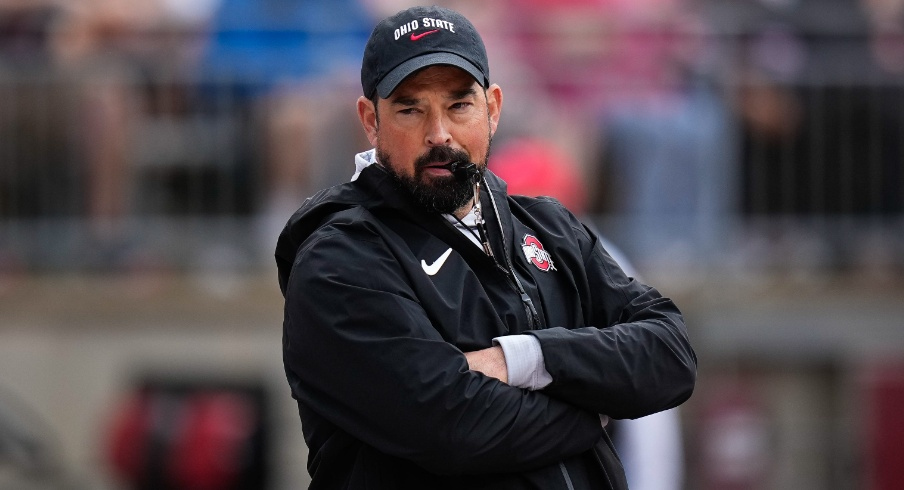
In an era where college football players can transfer after a single season, Ryan Day thinks many young athletes are leaving too soon.
Speaking Tuesday on Josh Pate’s College Football Show, Day voiced support for the NCAA potentially adopting a mandatory two-year commitment for student-athletes before entering the transfer portal.
“I feel pretty strong about that. I do,” he said.
The Ohio State head coach acknowledged such a change would create “ripple effects in other areas,” meaning the NCAA and its various committees would need to weigh several factors before implementing a two-year requirement.
“But if you’re looking at the player who comes in at midyear now, their (high school) season gets done, they jump right into spring ball, they have this season,” Day said. “During that freshman season, typically, they’re not playing as much as they’d like. They’re going through challenges. They’re failing. But that’s part of being a freshman. You gotta fail. You gotta fail to learn. That’s how it works.”
Day said young players often make transfer decisions before they’ve fully adjusted to college football.
“There are all these expectations in recruiting, and then when their freshman year doesn’t go exactly the way they want, they get done in December and January, and there’s no cooling off phase right there,” he said. “It’s emotional. It’s raw. A lot of times, the season is still going on.”
Day thinks a mandatory two-year commitment could give players more time to develop physically, mentally and emotionally before reconsidering their future.
“To me, the ability to say, OK, I’m gonna go somewhere for two years, I make a two-year commitment — obviously, there are extenuating circumstances like a coaching change or something like that — but that allows them to, OK, I come in, I work in the spring, I go through my freshman year, I go through another spring, I go through my sophomore year and now I am in a different place than I would have been before,” Day said.
A well-documented mental health advocate, Day said the two-year structure could also benefit players’ mental health and encourage them to persevere through adversity.
Day also said players from previous generations often had no choice but to work through early-career struggles rather than immediately seek a fresh start elsewhere.
“I think the mindset of saying, I’m somewhere for two years, I’m not gonna come up for a year and try to reassess this again,” he said. “Plus, I just think it’s good for their overall mental health knowing that I’m somewhere for two years, and I know I have to push through adversity along the way and I got to grow. For a lot of us that went through that, we had four years. Transferring wasn’t an option. You had to figure it out. That’s a healthy thing.”