Jenner & Block’s investigation into the culture of Michigan’s athletic department identified “serious concerns” that university president Domenico Grasso described as “unacceptable.”
While Michigan declined to release the direct documents from the investigation into its athletic department, citing “the privacy of the members of our community who participated,” the university issued a news release on Monday summarizing the investigation’s findings.
Michigan commissioned an investigation by Jenner & Block, a Chicago-based law firm, in late 2025 to investigate allegations of an inappropriate relationship between football coach Sherrone Moore and executive assistant Paige Shiver. After firing Moore for that relationship in December, Michigan expanded that investigation into a culture review of its entire athletic department.
Per the university’s release, Jenner & Block conducted 350 interviews of nearly 300 witnesses, including coaches, athletics staff, athletes, university leaders and human resources personnel. Jenner & Block received information from more than 90 individuals through its investigation hotline and reviewed more than 20,000 documents over the course of its investigation.
According to the university, the culture review identified three overarching areas for improvement for Michigan’s athletic department:
- Leadership accountability: Ensuring leadership at all levels consistently follows through when misconduct is identified.
- Organizational structure: Addressing weaknesses in investigations, human resources, compliance, and oversight.
- Reporting culture: Reducing barriers to reporting concerns and fostering an environment where employees and student-athletes feel comfortable raising issues.
The investigation did not find evidence of “widespread” misconduct throughout the athletic department, according to the university. However, “the culture review found that weaknesses in accountability, organizational structure, oversight, and reporting created conditions in which misconduct was not always addressed consistently, promptly, or in accordance with University expectations.”
Specific to Michigan football, Jenner & Block’s culture review found that “the football program’s prominence and organizational structure created unique oversight challenges.”
“The culture review concluded that existing oversight mechanisms were not sufficiently effective and recommended strengthening leadership oversight, clarifying responsibilities, enhancing reporting relationships and improving compliance processes,” Michigan wrote in its release.
Although the Wall Street Journal reported last week that Michigan athletic director Warde Manuel raised concerns about Moore’s relationship with Shiver in August 2024, the investigators did not find that any current Michigan employee had “direct, contemporaneous evidence” of Moore’s relationship with Shiver until the university launched its investigation into Moore.
That said, the investigation “identified failures to quickly and effectively act on allegations of wrongdoing by Athletic Department employees” by Manuel, who will step down as Michigan’s athletic director at the end of 2026 following the investigation.
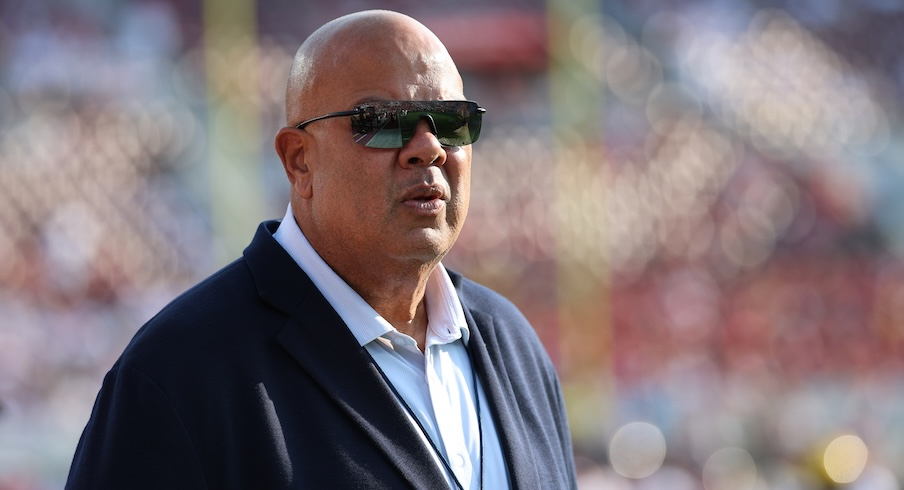
Michigan president Domenico Grasso described the issues uncovered by the culture review as “serious concerns that require immediate action.”
“These include failures in accountability; structural deficiencies; weaknesses in our reporting and support systems; and concerns about retaliation,” Grasso said. “This is unacceptable. We have significant work ahead to restore Michigan Athletics to its standing as a model program not only on the field, but also off the field.”
In response to the investigation, Michigan plans to develop a formal implementation plan focused on strengthening the athletic department in six key areas: strengthening its compliance office, enhancing human resources operations, establishing consistent investigative policies and procedures, improving processes for reporting and escalating concerns, strengthening athletics leadership and organizational structure, and expanding student-athlete health and wellness support.
1. Compliance Function
The University will strengthen the independence, visibility, and authority of its compliance function to reinforce institutional accountability. This includes evaluating the creation of a C-suite officer for Compliance to lead the Ethics, Integrity, and Compliance Office and reviewing reporting relationships so Athletics Compliance has greater institutional independence while continuing to support the Department of Athletics.2. Human Resources Function
The University will strengthen the accountability and independence of the Athletics human resources function by reviewing reporting structures and implementing enhanced hiring, onboarding, and offboarding practices. Additional reforms include incorporating student-athlete feedback and key performance indicators into coaching evaluations, strengthening performance management, establishing a formal progressive discipline policy with clearly defined expectations and termination protocols, and using exit interview data to identify organizational trends and opportunities for improvement.3. Policy Changes
The University will establish consistent investigative policies and procedures based on best practices, including standardized investigative protocols, documentation requirements, and expectations for truthful cooperation with investigations. The University will also evaluate policies governing investigators’ access to relevant information and work-related personal devices, when appropriate, in connection with credible allegations of misconduct.4. Escalating Misconduct
The University will strengthen processes for identifying, reporting, evaluating, escalating, and documenting concerns involving student-athlete health and safety, NCAA compliance, human resources matters, and other significant issues. Reforms include establishing clear reporting expectations, defined investigative pathways, formal escalation procedures for matters involving senior leaders, and centralized documentation and tracking of investigations and their outcomes.5. Athletic Department Leadership and Structure
The University will strengthen leadership accountability and departmental cohesion by clearly defining the responsibilities of Sport Administrators, enhancing oversight across all athletics programs and reinforcing expectations regarding accountability, integrity, and zero tolerance for retaliation. Additional actions include evaluating whether football should have a dedicated Sport Administrator, increasing regular reporting on the status of compliance matters and investigations to the president and Board of Regents, formalizing cross-department collaboration, requiring regular all-staff meetings, and increasing engagement with all athletics programs to ensure consistent oversight and support.6. Student-Athlete Welfare and Health
The University will further strengthen its commitment to student-athlete health and wellbeing by expanding access to confidential medical and mental health resources, implementing mandatory coach training on student-athlete mental health, nutrition and eating disorders, evaluating the creation of a dedicated eating disorder support team comprised of dietitians, physicians and counseling professionals, and regularly assessing student-athlete wellness and nutrition needs to guide future improvements.
Michigan is also exploring the possibility of creating an Athletics Board that would advise the university on matters related to its athletic department.
Investigation came after years of scandals in Ann Arbor
The recommendations come after a host of scandals within the Michigan athletic department in recent years.
Moore was arrested shortly after his firing for entering Shiver’s home without permission, and pleaded no contest to charges of trespassing and malicious use of a telecommunications device in March.
Last August, the NCAA found “overwhelming evidence” that Michigan football conducted an illegal sign-stealing scheme from 2021 to 2023 under the leadership of former analyst Connor Stalions, which resulted in fines of approximately $30 million against Michigan. Another major scandal involving Michigan football in recent years was the arrest of former co-offensive coordinator Matt Weiss, who was indicted on 24 federal charges in March 2025 for allegedly obtaining unauthorized access to personal information and intimate photos and videos of thousands of college athletes.
The NCAA also found that former coach Jim Harbaugh’s program committed recruiting violations during the COVID-19 pandemic, which resulted in a four-year show-cause penalty against Harbaugh. Harbaugh, who left Michigan after the 2023 season to become the head coach of the NFL’s Los Angeles Chargers, later received another 10-year show-cause penalty for his involvement in the sign-stealing scheme.
Michigan’s controversies in recent years haven’t been limited to the football program, as men’s hockey coach Mel Pearson was fired in 2022 after an investigation into his program revealed a toxic culture and potential violations of university codes. Former men’s basketball coach Juwan Howard was suspended for five games in 2022 after he struck a Wisconsin assistant coach during a postgame handshake line.