BOOM
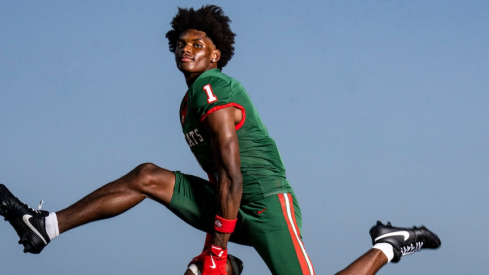
Karlos May commits to Ohio State, completing a loaded defensive line class for the Buckeyes.
Karlos May commits to Ohio State, completing a loaded defensive line class for the Buckeyes.
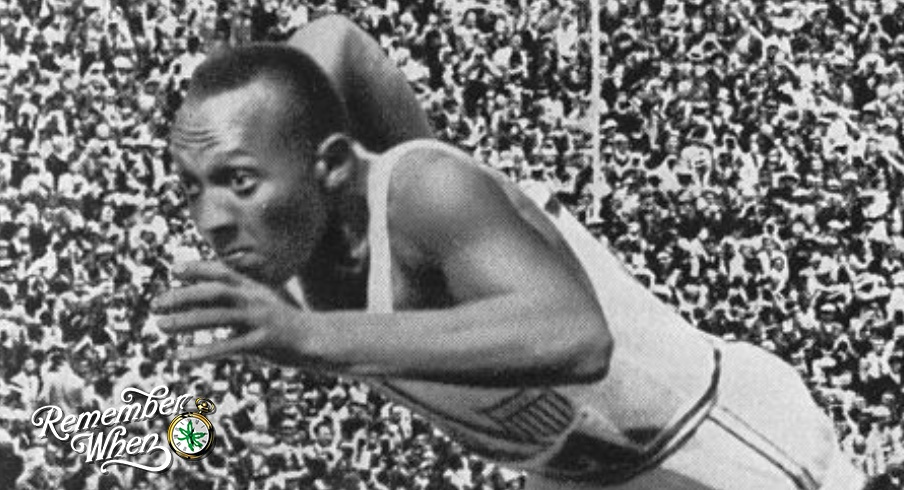
Four gold medals made Jesse Owens the most famous athlete in the world, but they didn't make him rich.
Four months after dominating the 1936 Olympics in Berlin, the Ohio State legend stood on a track in Havana with a 40-yard head start and a racehorse named Julio McCaw closing on him. Owens won, and the spectacle reportedly paid him $2,000.
Nearly 90 years later, in an era when your favorite college wide receiver drives a Lamborghini, Owens’ race illustrates how thoroughly the sporting establishment failed one of its greatest stars.
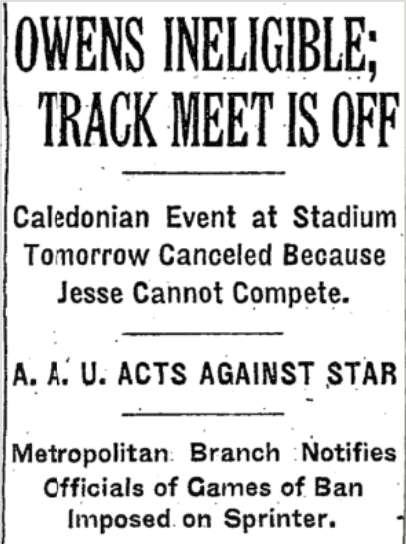
Before Jesse Owens raced a horse, the Amateur Athletic Union made it nearly impossible for him to race another man. Following the Olympics, the AAU sent Owens on an unpaid European exhibition tour that left him exhausted and homesick. When he pulled out of the tour, Avery Brundage, then president of the U.S. Olympic Committee (and Detroit native, we should add) suspended him from amateur competition.
Weeks later, the national AAU governing body warned other sprinters that racing Owens could jeopardize their own amateur status. This led to Owens being denied the opportunity to sprint at the Caledonian Games at Yankee Stadium and derailed a December matchup in Havana against Cuban sprinter Conrado Rodrigues.
So a Cuban horse named Julio McCaw, stood in for the sprint at Tropical Stadium on December 26, 1936.
Here's the New York Times' account of the race:
At the starting gun the Cuban jockey, J. M. Contino, in gold and purple silks, got the chestnut gelding Julio McCaw away to a fast start from a point forty yards behind Owens, who sprinted away like a flash. The horse cut down its own running distance by leaving the cinder track and crossing the turfed infield on the curve into the straightway before the grandstand, but before half the distance had been covered it was a foregone conclusion the steed would not catch the flying runner.
Showers during the past forty-eight hours had slowed the track. However, one of the three timers gave the time made by Owens as 0:09.7 although the other two clocked him in 0:09.9.
Owens pocketed $2,000 for the event (nearly $50,000 in 2026 dollars), an indignity for a four-time Olympic champion who had been denied ways to profit from his greatness.
Owens later acknowledged that racing horses was degrading, but asked what else he was supposed to do saying, "I had four gold medals, but you can't eat gold medals."
Today, an athlete like Owens could build generational wealth from his name, image and likeness. In 1936, four gold medals made him immortal, but racing a horse paid the bills.